Identify your target audience
Like many other sales and marketing efforts, effective sampling begins with identifying and understanding your audience. Who are the people you want to reach? What are their interests, preferences, and habits? What does your product mean to them? Ultimately, why should they care? Without the answers to these questions, you’ll be taking swings in the dark.
Look at the data
When it comes to questions about your audience, or questions about any element of your sampling campaign, you should be finding your answers through one thing – data. Empirical data and consumer insights should always be the driving force of your campaign. Otherwise, what are you basing your decisions on?
Take Hellman’s, for example. A campaign designed to position the classic mayo under the light of sustainability attracted the attention of Campaign UK, who said the brand had ‘lost the plot’. Logic would tell us that a sustainability angle on a well-known brand would always go down a treat. However, when a brand has been around since 1913, its purpose to consumers is so deeply routed that shifting it has no real bearing on engagement.
What we’re trying to say here is that data is the best way to make decisions about your brand. How you sample your product, who you sample it to and under what messaging is the key to your success, but you’ll only know the hows and whos by looking at the cold hard data.

Choose the right location
Now to get a little more specific. Choosing the right location for your sampling campaign is crucial.
You want to choose a location where your target audience is likely to be present in large numbers. Depending on the audience, this could be a train or underground station, shopping centre, trade show, or a local event. It’s also important to consider the physical layout of the location. You want to be visible – almost unavoidable – so that when people walk by, stopping to grab a sample almost becomes a natural part of their movements.

Be accessible
When it comes to location and many other aspects of your sampling campaign, you must be aware of accessibility. Even today, many brands do not consider the impact of inaccessible campaigns. Not only does the lack of consideration shape your brand as out of touch, but it also has monetary consequences.
In 2022 the reported spending of people in the UK with disabilities was more than £270 billion, and this is a market missed by numerous brands who haven’t given sufficient consideration to whether or not their campaigns are accessible.
Accessibility considerations include auditory, cognitive, neurological, physical, visual and temporary disabilities such as broken bones. You should also consider the age of your audience.
Train your team
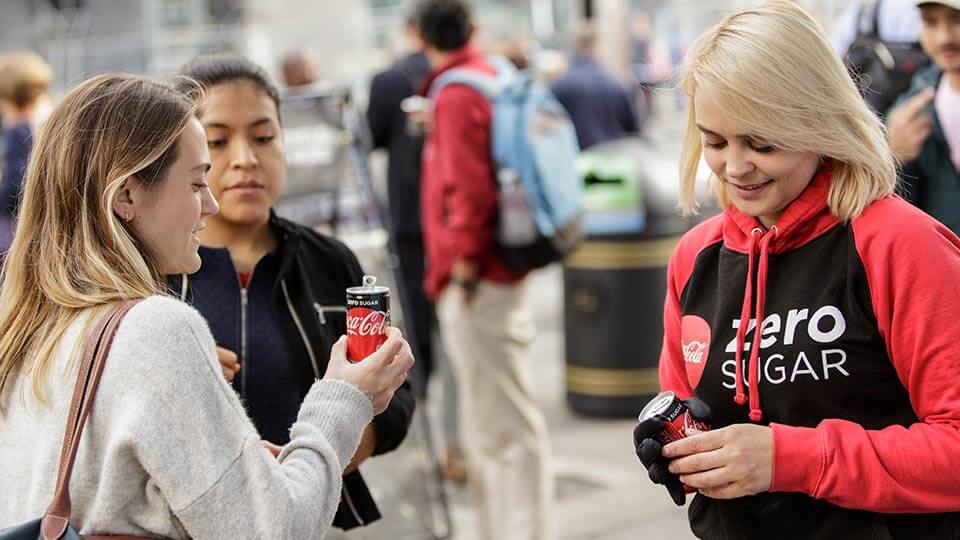
Your sampling team is the face of your brand during your campaign, so it’s vital that they are knowledgeable, enthusiastic, and friendly. The target audience should predict the selection and orchestration of the sampling team – in other words, your team should hold some of the values and interests of the people to whom they will sample. Provide your team with training on your product, as well as tips on how to engage with potential customers. Encourage them to be approachable and proactive in offering samples and answering questions.
In many ways, the success of a sampling campaign sits on the shoulders of your staff. You could have the best location, the best display and the best product, but if all the staff working your activation are disengaged, your potential customers will be too.
Create an engaging display
Equally, the best team in the world needs a compelling sampling campaign to work with. As such, your display needs to be visually appealing and attention-grabbing. This is your opportunity to make a good first impression and draw people in.
Consider using appropriate but bright colours, eye-catching graphics, and exciting props to make your display stand out. The stand or backdrop allows for communication around the benefits of your product to encourage people to try it.